What Is Bullying?
Most people think they would recognize bullying.
Most of the time, they do not.
Because the kind that does the most damage rarely looks the way they expect.
Sometimes it is loud.
Sometimes it is quiet.
Sometimes it is physical.
Sometimes it is a rumor, a screenshot, a group chat, a label, or a joke everyone pretends is harmless.
Bullying is not always one obvious moment.
Sometimes it is the slow message that someone does not belong.
Four Forms of Bullying
PHYSICAL BULLYING
Physical bullying is when someone uses their body, strength, or physical presence to hurt, scare, control, or intimidate someone else.
It can look like pushing, tripping, blocking someone’s way, grabbing their things, damaging belongings, or making someone feel physically unsafe.
It does not have to look like a fight to count.
Sometimes it is small enough for adults to miss and repeated enough for a child to dread.
Most bullying does not look like this.
VERBAL BULLYING
Verbal bullying is when words are used to hurt, humiliate, threaten, or label someone.
It can look like name calling, insults, mocking, cruel jokes, threats, or comments about someone’s body, race, religion, family, identity, ability, or reputation.
Sometimes people say, “It was just a joke.”
But if the joke is meant to make someone feel smaller, it is not harmless.
Words can become a place a child has to live inside every day.
Words leave marks too.
You just cannot see them.
DIGITAL BULLYING
Digital bullying is bullying that happens through phones, apps, texts, group chats, games, social media, photos, videos, or screenshots.
It can look like posting about someone, sharing private messages, removing someone from a chat, making fake accounts, spreading rumors online, sending threats, or using screenshots to embarrass or control someone.
Digital bullying follows kids home.
That is what makes it so heavy.
There is no hallway to leave.
No lunch period that ends.
No safe place where it automatically stops.
The space follows them home now.
There is no bell that signals the end of it.
It is there when they wake up
and there when they go to sleep.
SOCIAL AND RELATIONAL BULLYING
Using relationships, reputation, and the social
group as weapons.
Turning friends against someone.
Spreading rumors.
Deciding as a group who is in and who is out.
Making someone feel like they have to earn
their place every single day.
Sometimes someone in the group gives them
a label that is not true, like “smelly,”
and says it enough times that other people
start believing the lie.
Sometimes the message is clear.
Stay friends with them, and you will be next.
This is one of the most damaging forms of bullying and one of the hardest to prove.
Some forms of bullying are harder to see, harder to prove, and harder for children to explain.
Learn more about the quiet forms that often do the most damage.
The Quiet Kind
This is the kind of bullying people miss.
It does not leave bruises.
It does not always get reported.
It is easy to miss.
And when a child finally tries to name it,
it is easy to dismiss.
But it is real.
A space begins to form
between that child and everyone else.
Sometimes it is physical.
Sitting by themselves at lunch.
Standing near the group,
but not being part of it.
Sometimes it is emotional.
The quiet feeling of being unwanted.
Unchosen.
Unseen.
This kind of bullying can show up through damaged friendships, social pressure, group exclusion, rumors, labels, screenshots, and silence.
None of it requires a single shove.
None of it requires a single shouted word.
But it can still cause real and lasting harm
None of it requires a single shove.
None of it requires a single shouted word.
But it can still cause real and lasting harm.
Learn more about the quiet forms of bullying:
WHAT IT ACTUALLY LOOKS LIKE

What It Actually Looks Like
This is what social exclusion looks like in real life.
In middle school hallways.
In high school cafeterias.
In group chats.
In classrooms.
In the everyday places where kids are supposed to feel like they belong.
It starts small.
A snide remark made just loud enough.
A look exchanged when someone walks up.
An “ugh” when they enter the room.
A “thank God” when they leave.
A joke that everyone understands is meant for them.
A label repeated so many times that people start to believe it.
Then it becomes a pattern.
The circle of friends that closes when they walk up.
The group chat that goes quiet when they are in it
and louder when they are not.
The lunch table where they sit alone
while everyone else sits together.
The plans made in front of them
but never with them.
The inside jokes that exist specifically
to remind one person they are on the outside.
The private message that gets screenshotted.
The apology that gets ignored.
The mistake that becomes a permanent label.
The story that spreads faster than the truth.
Then comes the part nobody talks about enough.
The child starts to protect themselves.
They put their earbuds in before they even get to school, not because they are listening to music, but because it gives them somewhere to look.
Something to do.
A reason not to stand there
waiting to be ignored.
They eat lunch fast, or alone, or not at all.
They stop trying to join conversations
because the risk of being shut out again
is worse than the silence.
They volunteer less in class.
They raise their hand less.
They take up less space.
Not because they want to disappear.
Because taking up space started to feel
like something they had to earn permission for.
They start to self isolate.
Not because they want to be alone.
Because being alone hurts less
than being rejected in front of people.
They stop telling their parents.
Not because nothing is happening.
But because they tried to explain it once
and it did not sound like enough.
“Nobody hit me.”
“Nobody called me a name.”
“I just feel left out.”
And somehow that never feels like enough
to make anyone take it seriously.
But it is enough.
It is more than enough.
And it is happening every day
in schools everywhere.
WHEN THE RESPONSE BECOMES THE HARM
Sometimes a child makes a mistake.
They say something unkind.
They send a private message.
They hurt someone’s feelings.
They make a choice they should not have made.
That matters.
Harm should be acknowledged.
Apologies should be made.
Forgiveness should be given.
Repair should be encouraged.
Repair means responsibility, changed behavior,
and the chance to grow.
It does not mean shame, revenge,
or social destruction.
But there is a difference between accountability
and turning one mistake into someone’s whole identity.
Before we decide who someone is forever,
we should all be willing to look in the mirror first.
Close your eyes for a moment.
Think of one day, one sentence, one message,
one joke, one reaction, or one choice
you wish you could take back.
Something you said when you were angry.
Something you repeated without thinking.
Something you laughed at because everyone else did.
Something you sent and later regretted.
Something you would handle differently now.
Now imagine that one moment became your entire identity.
Imagine people stopped seeing your apology.
Your regret.
Your growth.
Your full story.
Imagine they only saw that one moment.
Imagine they repeated it again and again
until your name became attached to it.
Imagine they told other people who you were
before those people ever got to know you. Imagine they called you awful.
Unforgivable.
A terrible person.
Imagine they said they would not care
if you hurt yourself.
That is not accountability.
That is cruelty.
No one is perfect.
Every person has said something, done something,
laughed at something, repeated something,
or stayed silent at a moment
they wish they could take back.
Accountability should help people grow.
It should not turn one mistake
into a life sentence.
A hurtful comment should be addressed.
But no child should be turned into a permanent villain.
No child should be publicly shamed forever.
No child should be pushed so far outside the circle
that they begin to believe they no longer matter.
Because sometimes the most dangerous bullying comes from kids who believe they are the good ones.
Before judging someone else,
look in the mirror first.
Then choose repair.
Choose compassion.
Choose forgiveness.
Choose to close the space.
When Moral Authority Becomes Hate
There is a kind of bullying that hides behind moral language.
It does not always look like one child being mean for no reason.
Sometimes it looks like a group deciding they have the right to destroy someone because of one word, one text, one rumor, one accusation, or one mistake.
They call it accountability.
They call it standing up for what is right.
They call it protecting people.
But sometimes it is none of those things.
Sometimes it is hate with better vocabulary.
Sometimes it is cruelty with a moral excuse.
Sometimes it is a group of kids using one mistake to give themselves permission to treat another child as less than human.
That should disgust us.
A child can say something wrong.
A child can repeat a word they should not have said.
A child can send a cruel text.
A child can say something mean about how someone looks.
A child can hurt someone’s feelings.
That matters.
They should be corrected.
They should apologize.
They should repair what they can.
They should learn from their mistake.
But one wrong word does not automatically tell the whole story of a person.
One mean text does not make someone the worst person in the world.
One ugly comment does not erase every decent thing a child has ever done.
One rumor does not give a group the right to ruin someone.
And one label does not give anyone permission to hate.
This is where kids need to look in the mirror.
Before you decide another child is unforgivable, ask yourself:
Have you ever said something cruel?
Have you ever laughed at a joke you should not have laughed at?
Have you ever repeated a word in a song without thinking about it?
Have you ever said something behind someone’s back?
Have you ever judged someone’s appearance?
Have you ever sent a message you would be ashamed for everyone to see?
Have you ever stayed silent while someone else was being hurt?
Have you ever wanted grace for yourself?
Then stop pretending you are above everyone else.
You are not.
No one is.
That does not mean harm does not matter.
It means hypocrisy matters too.
It means proportionality matters.
It means truth matters.
It means repair matters.
It means no child gets to appoint themselves morally superior and use that position to destroy another child.
Because when a group decides one child is “bad,” they often stop caring about truth.
They stop asking what actually happened.
They stop asking if the story changed.
They stop asking if someone lied.
They stop asking if there was context.
They stop asking if the child apologized.
They stop asking if repair is possible.
They stop asking if the punishment is becoming worse than the original harm.
They only want the label.
Racist.
Gross.
Awful.
Problem.
Toxic.
Bad.
Once they have the label, they think they have permission.
Permission to spread rumors.
Permission to exclude.
Permission to humiliate.
Permission to threaten.
Permission to tell others not to speak to that person.
Permission to mock their apology.
Permission to decide that person deserves pain.
Permission to say they should hurt themselves.
Permission to say they would not care if they did.
That is not accountability.
That is not justice.
That is not moral courage.
That is hate.
And it is one of the ugliest forms of bullying because the people doing it often believe they are the good ones.
They are not.
If you are spreading rumors, you are not the good one.
If you are repeating a label without knowing the full truth, you are not the good one.
If you are forwarding screenshots to humiliate someone, you are not the good one.
If you are laughing while someone is being socially destroyed, you are not the good one.
If you are telling someone to hurt themselves, you are not the good one.
If you are saying you would not care if another child disappeared, you are not the good one.
You have crossed a line.
And you should feel the weight of that.
Because conscience is supposed to work.
A decent person should feel sick when they realize they helped make another human being feel worthless.
A decent person should feel ashamed if they used a word like “accountability” to excuse cruelty.
A decent person should stop when they see that the punishment has become bigger, uglier, and more dangerous than the original mistake.
That is the part adults must name.
This is not kids “holding someone accountable.”
This is not kids “taking a stand.”
This is not kids “protecting the group.”
This is a group using moral authority as a weapon.
And when moral authority becomes a weapon, it becomes dangerous.
It divides.
It dehumanizes.
It teaches kids that if they can find the right label, they no longer have to show compassion.
That is a lie.
A wrong word should be addressed.
A cruel text should be addressed.
A harmful comment should be addressed.
But no mistake gives other children the right to become cruel.
No mistake gives them the right to spread hate.
No mistake gives them the right to strip someone of their humanity.
No mistake gives them the right to act as judge, jury, and executioner.
The child who caused harm needs accountability.
The child who turns that harm into a campaign needs accountability too.
Maybe even more.
Because sometimes the response becomes worse than the original harm.
And sometimes the most dangerous bullying comes from kids who believe their cruelty is righteous.
“Sometimes the most dangerous bullying comes from kids who believe their cruelty is righteous.”
How It Can Progress
Bullying does not always happen all at once.
Sometimes it starts with one comment.
One joke.
One shove.
One screenshot.
One rumor.
One group chat.
One person being left out.
Then it repeats.
Then it spreads.
Then other people join in, stay silent, or look away.
Not every child experiences it in the same order.
Not every situation looks the same.
But for many children, the pattern can begin to look like this:
Stage 1: The Moment
Something happens.
A comment.
A joke.
A push.
A post.
A rumor.
A screenshot shared without permission.
A seat that is not saved.
A group chat they are removed from.
Maybe it looks small to other people.
But the child feels it.
Stage 2: The Repeat
Then it happens again.
The same joke.
The same name.
The same person targeted.
The same exclusion.
The same screenshot brought up.
The same rumor repeated.
The same group deciding who belongs and who does not.
This is when it stops feeling like a bad moment and starts feeling like a pattern.
Stage 3: The Audience
Other people begin to notice.
Some laugh.
Some repeat it.
Some forward it.
Some stay quiet.
Some do nothing because they do not want to become the next target.
The audience makes the harm bigger.
Bullying grows when people watch and pretend they are not part of it.
Stage 4: The Label
The child stops being seen as a whole person.
They become the joke.
The rumor.
The mistake.
The weird one.
The dramatic one.
The annoying one.
The one nobody sits with.
The one everyone talks about.
Once a label spreads, people start treating the label like the truth.
Stage 5: The Isolation
The child starts pulling back.
They stop trying to join.
They stop talking about friends.
They stop raising their hand.
They put their earbuds in.
They avoid the hallway, the lunch table, the group chat, the party, the team, or the place where it keeps happening.
Sometimes they are pushed out.
Sometimes they leave first because rejection has started to feel inevitable.
Either way, the space gets bigger.
Stage 6: The Belief
This is the most dangerous part.
The child starts to believe the bullying says something true about them.
That they are the problem.
That they are not wanted.
That they do not belong.
That nothing will change.
That belief is a lie.
But it can feel real when a child has been living inside it long enough.
Stage 7: The Silence
They stop telling people.
They say they are fine.
They give one word answers.
They stop explaining because explaining has not made it stop.
This is when adults need to pay attention most.
Not only when a child is loudly upset.
But when they go quiet.
Silence is not always peace.
Sometimes silence is the signal.
Why It Starts Earlier Than We Think
Bullying no longer waits for middle school.
Children are navigating phones, group chats, FaceTime calls, screenshots, birthday party photos, and social pressure earlier than many adults expect.
Sometimes the exclusion is obvious.
A child is not invited to the party.
Then someone calls them from the party.
Or sends a picture.
Or makes sure they know everyone else is there.
Sometimes it looks small to adults.
A joke.
A nickname.
A message.
A screenshot.
But to a child, the message is clear:
Everyone is together.
You are not.
Everyone is laughing.
You are the reason.
Everyone knows something.
You are the last to find out.
And now, because of phones, that message can reach them anywhere.
At home.
In the car.
In their bedroom.
On a weekend.
At night.
The space follows them.
By middle school and high school, the patterns can become more established.
Reputation matters more.
Group dynamics become more complicated.
The harm can become quieter, more calculated, and harder to name.
But the roots often start much earlier.
That is why children need the language for kindness, compassion, forgiveness, and inclusion before the damage becomes a pattern.
That is why they need to learn early that every day, in every hallway, lunch table, group chat, classroom, and birthday party, they have a choice.
They can widen the space.
Or they can close it.
Most parents are watching for the wrong signs.
They are watching for tears.
For conflict.
For a name they can point to.
A bruise.
A threatening message.
For something that sounds serious enough
to take to the school.
But bullying does not always give you that.
Sometimes there is no single event.
No obvious villain.
No dramatic confrontation.
No screenshot that explains the whole thing.
Sometimes it is quieter.
Slower.
Harder to prove.
And much easier for a child to hide.
When they say “I don’t care”
They may say things like:
“I don’t care.”
“It doesn’t matter.”
“I didn’t want to go anyway.”
“I’m fine.”
“They’re stupid.”
Sometimes they brush it off
before anyone can see that it hurt.
Sometimes “I don’t care”
is not indifference.
It is protection.
It is the language children use
when caring has started to feel too painful.
They eat differently.
Sleep differently.
Act differently.
Their whole energy shifts.
And you feel it
even if you cannot name it.
These are not just teenage phases.
These are signs.
And the most important thing you can do
is notice them
and create a space safe enough
that they will eventually tell you.
What it can look like at home
They come home and go straight to their room.
They stop mentioning friends
they used to talk about all the time.
They are vague when you ask about their day.
“Fine.”
“Nothing.”
“I do not know.”
They stop wanting to go to school events, parties, or anything social.
And the excuses get more creative every time.
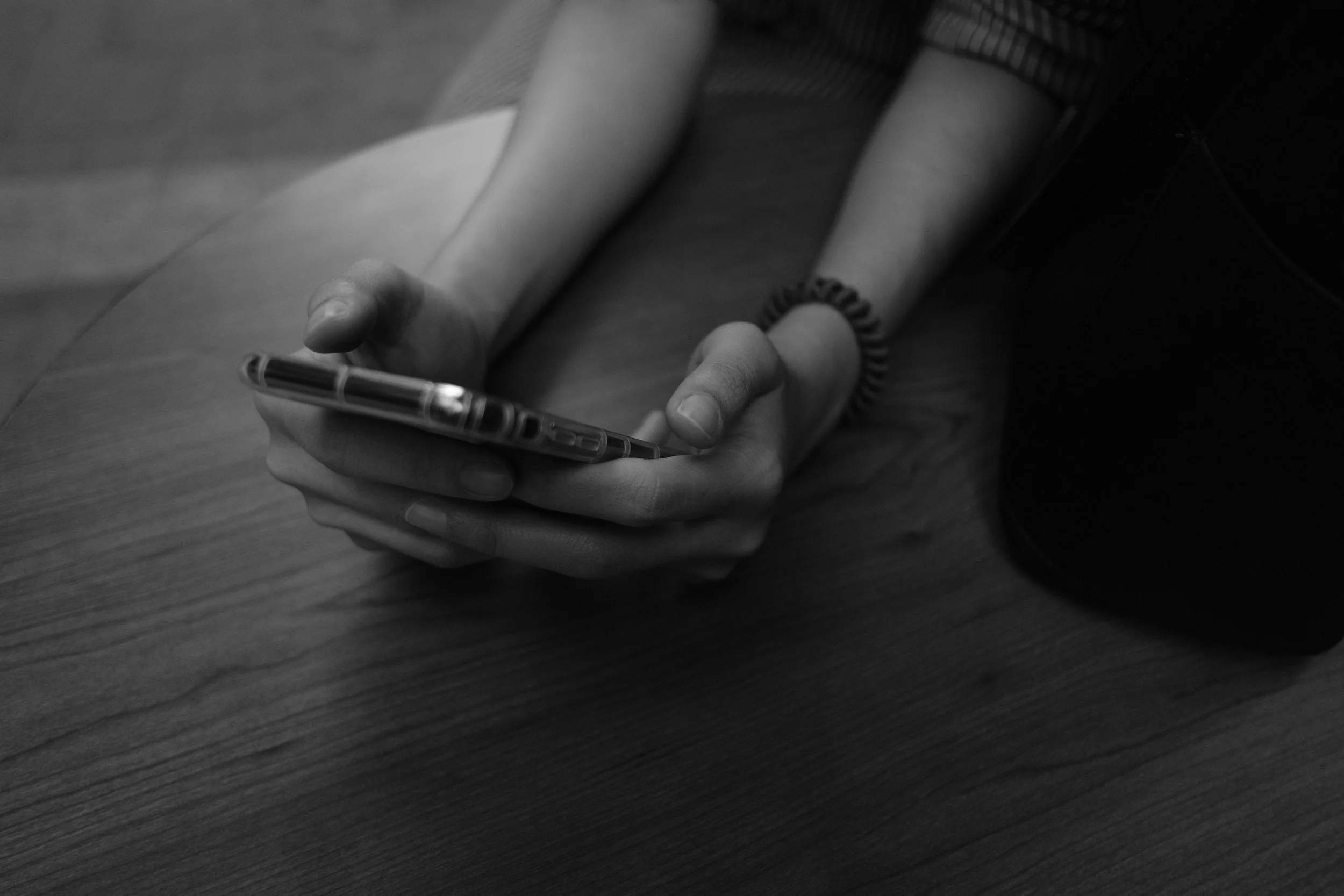
The phone can tell two different stories
They are on their phone constantly.
Not because they are connected,
but because staring at a screen gives them
something to do that is not sitting alone.
Or they are barely on their phone at all.
Because the silence of it not buzzing
is easier than watching everyone else’s plans
show up in a feed they are not part of.
What “I Don’t Care” Can Mean
*
What “I Don’t Care” Can Mean *
What You Can Do
Start small
You do not need to fix it
in one conversation.
You need to start one.
Start small.
Start specific.
Not:
“Are you being bullied?”
That question can close doors.
Listen first
When they do talk, listen first.
Do not minimize it.
Do not immediately look for the other side.
Do not say, “I am sure they did not mean it.”
Do not tell them to just ignore it.
Do not start with, “What did you do?”
Start with:
“I believe you.”
“I am glad you told me.”
“That sounds really hard.”
“Tell me more.”
Believe that what they are feeling is real.
Watch the pattern
One bad day is one bad day.
A pattern is different.
Pay attention if your child repeatedly:
Stops talking about friends.
Avoids school, practice, parties, or group events.
Gets anxious on Sunday nights or Monday mornings.
Seems upset by their phone.
Deletes messages quickly.
Stops eating lunch normally.
Comes home angry, quiet, or exhausted.
Says “I am fine” in a way that does not feel fine.
The pattern matters.
Try asking
“Who did you sit with at lunch today?”
“Did you notice anyone sitting alone?”
“Did anything feel off?”
“Did anyone make you feel embarrassed, scared, ignored, or left out?”
“Is anything happening in a group chat that I should know about?”
“Did anyone say something that stuck with you?”
“Is there anyone you are worried about seeing tomorrow?”
Small questions feel safer.
They do not require a child to explain the whole thing at once.
Help them name it
Is it physical?
Is someone pushing, grabbing, blocking, or threatening them?
Is it verbal?
Are they being mocked, insulted, labeled, or humiliated?
Is it social?
Are they being excluded, ignored, left out, or turned against?
Is it digital?
Is it happening through texts, group chats, screenshots, posts, games, or social media?
Is it retaliation?
Did they speak up, apologize, set a boundary, or try to repair something, and now people are punishing them for it?
Naming it matters.
Because once a child can name what is happening, they can begin to understand that the problem is not who they are.Naming it matters.
Because once a child can name the space,
they can begin to understand
that the problem is not who they are.
And if nothing else, keep showing up.
Keep asking the small questions.
Keep making it clear that whatever is happening
out there, home is a place where they
do not have to earn their seat.
Because that matters more than you know.

The Child Who Closes the Space
Sometimes the bravest child in the room
is not the loudest one.
It is the child who notices someone sitting alone
and sits down.
The child who stays friends
when the group makes it clear
there may be a cost.
The child who refuses to join the whispering.
The child who does not pass the screenshot along.
The child who says,
“That is not okay.”
The child who tells an adult when someone is being threatened or hurt.
The child who accepts a real apology instead of keeping the punishment going.
The child who includes the person
everyone else has decided to leave out.
Sometimes the message from the group is clear:
Stay friends with them, and you will be next.
Sit with them, and people will talk about you too.
Speak up, and the attention may turn on you.
And sometimes the herois the child who stays anyway.
That is courage.
That is kindness when it costs something.
That is what it means to close the space.
Important Note
Close The Space Foundation does not investigate bullying reports and is not a reporting body or crisis intervention service.
If your child is in immediate danger, please contact your school administration, a trusted professional, or local authorities.
Our work is focused on education, awareness, and positive action.
Now that you see it,
choose to close it.
Every day you get to choose.
Choose to close the space.